Book soon Openers · Heritage Park
Photo-Eye Sensor Alignment or Replacement in Heritage Park
The door will only go down while a finger stays on the wall button; let go and it stops or reverses. From the remote it opens fine but never closes, so someone has to stand in the garage every time.
Call now · open 24/7(289) 907-1866Right now
Before the door is looked at
Call (289) 907-1866, open 24/7.
Never bypass, tape over or relocate the sensors to make a door close; a door that reverses is reporting something worth fixing.
In plain words
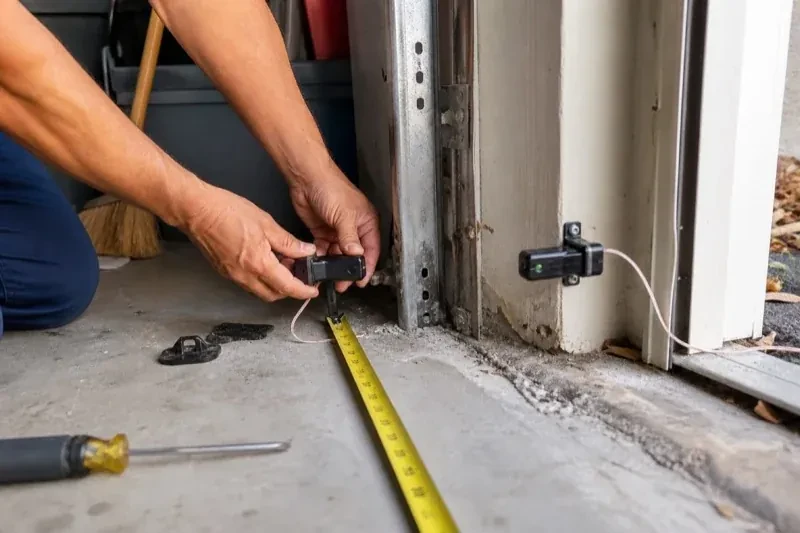
Your opener has been trying to tell you what is wrong. The head unit flashes its light a set number of times, or blinks a pattern on its up and down arrows, and each pattern maps to a cause on the maker's chart: beam blocked or misaligned, wire cut or disconnected, wires reversed or shorted. Down at the floor, many sensor pairs carry an indicator on each side, though some older pairs light only the receiver; check that model's chart, since a receiving light going out or flickering usually points to alignment. The technician reads both sets of signals first, which is why the repair usually takes one visit.
How the visit goesAfter a cold night the door stays open until the garage warms up. There is frost on the sensor lenses and a ridge of salty slush piled against the brackets where the snow blower was parked.
Photo-Eye Sensor Alignment or Replacement · Heritage Park
How the visit goes
- 1
Clearing and walking the beam
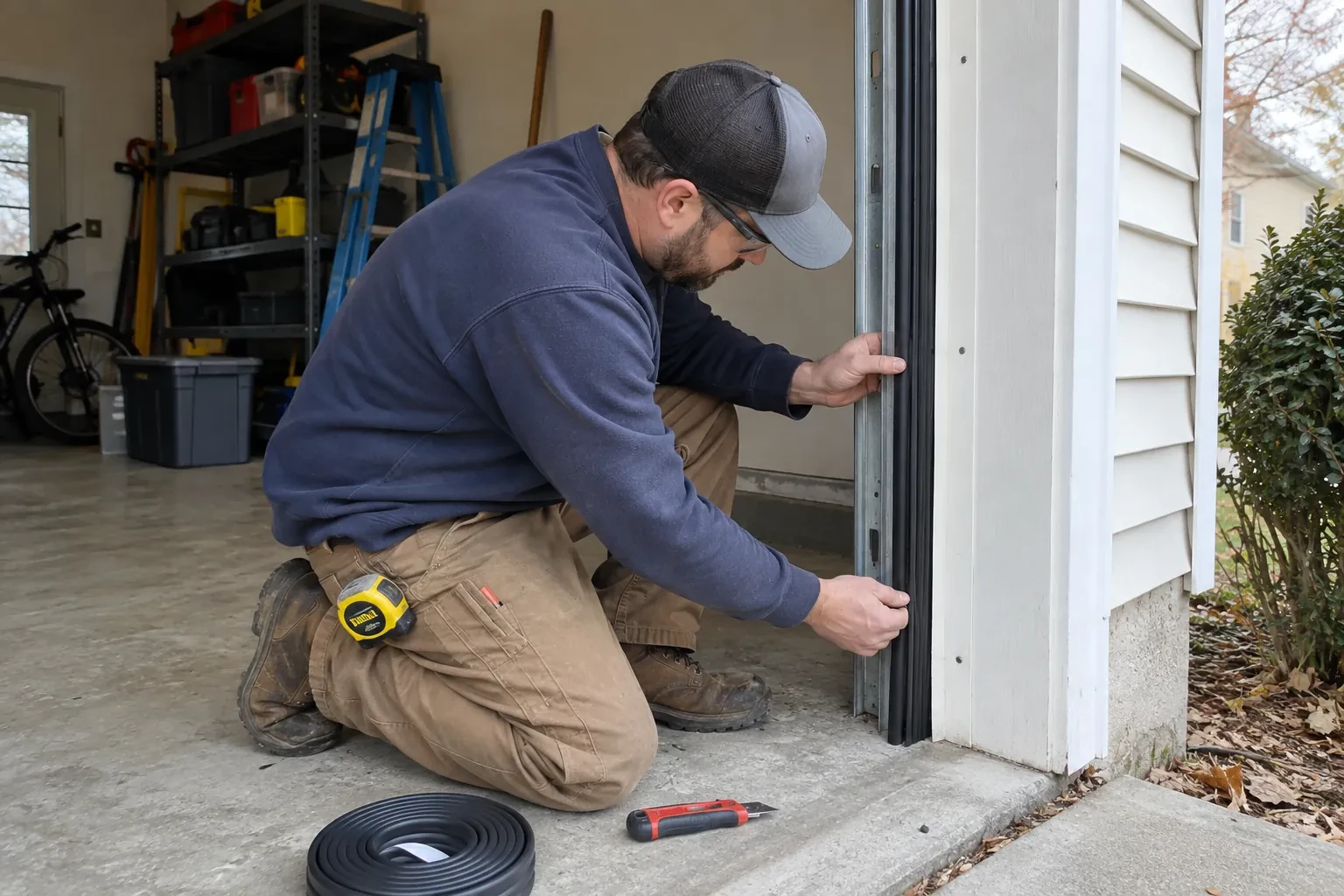
Before anything is adjusted, the technician clears the strip of floor between the two sensors and looks along the beam line at sensor height. Things that break a beam are rarely dramatic: the corner of a recycling bin, a hose left coiled by the wall, a bag of salt, leaves blown in under the door, a cobweb bridging a lens, a new weatherstrip or track shoe that sits a little proud. Snow and ice piled inside the door in winter count too. With the path clean, the door is tried again, because a fair share of sensor calls end right here, with a lesson about where things can and cannot sit.
- 2
Dealing with the sun
A receiver that looks into the low sun is fixed by geometry. The simplest cure is to swap the two sensors side to side so the receiver looks away from the doorway light and the sending eye, which is not affected, takes the sunny position. Where the layout rules that out, a small hood or shade is fitted over the receiving lens, deep enough to shield it without narrowing the beam path. The wiring is extended or re-routed as needed and both lights are checked at the time of day the fault used to appear, or with a strong light aimed at the lens to stand in for the sun.
- 3
A record of the work
You have a short written note of what was done: the opener make and model, what the diagnostic code and the sensor lights showed on arrival, whether the fault was alignment, wiring, sun or a worn sensor, what was replaced and where the new parts sit. It records the height the sensors were set at and that both tests were passed with you watching. That note is useful for a home inspection, for the next technician, and for you, because it shows what normal looks like on this door so a future change is easy to describe over the phone.
In the van
- Protective wire channel
- Wire connectors
- Wall or floor angle brackets
- Insulated wire staples
- Track-mount sensor brackets
What affects the quote
- 1
Protecting exposed wire
On a wall where the wire runs in the open, a slim protective channel or a re-route higher along the wall keeps bins, bikes and mice away from it, and is quoted as its own line.
- 2
Length and route of the wire run
A damaged section near a sensor is a short repair. A fresh run from the motor to both sides of the doorway takes longer, more so where the wire is buried in a finished ceiling.
- 3
Undoing an earlier shortcut
Sensors taped together beside the motor, mismatched pairs from different generations or a bypassed circuit are put right first, which means new wire down each side and fresh brackets at the doorway.
Same fees day, night or weekend.
Photo-Eye Sensor Alignment or Replacement: questions
Could the door's force setting be the real reason it reverses?
Sometimes. The opener also backs up when it meets more resistance than its force setting allows: an iced seal, a limit that drives the door into the slab, rollers stiff with cold. From the driveway that looks identical to a beam problem. Timing is a clue, not proof, since a flickering beam can reverse the door partway and severe binding can trigger a force reversal right at the start; the sensor lights and diagnostic pattern settle which it is. The technician checks both so the right thing is fixed.
The door closes if I hold the wall button. Is that a fix?
It is a built-in stopgap, not a repair. When the sensor circuit is not satisfied, many openers allow a close from the wall control only while the button is held, on the idea that a person standing there can see the doorway. Newer units drop that behaviour altogether and simply hold the door open. Either way the door is telling you the beam has failed, and a sensor visit puts remote closing back.
Can the sensors be mounted on the wall instead of the track?
Track-mounted clips are the preferred, manufacturer-recommended arrangement. A wall-mounted angle bracket is the next choice where the track sits far back from the opening or the clip keeps getting bumped; mounting to the concrete floor is kept as a last resort, used only when the sensor's own instructions allow it. The same rules apply: both sensors at a matched height no higher than about 15 cm, level, facing each other, with the wire secured. Wall mounting sometimes gives a cleaner beam line on older doors with unusual track layouts.
Openers & Access
Bigger photo, sooner job: Emergency Book soon Plan ahead
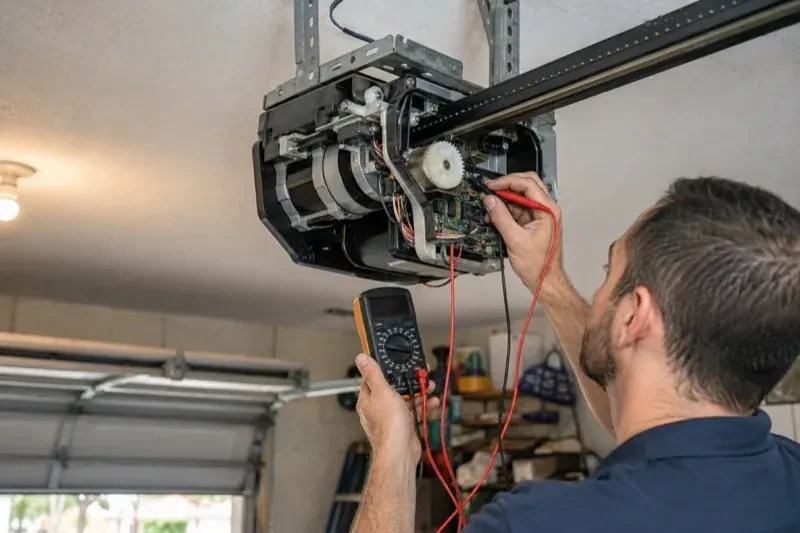 Book soonGarage Door Opener Diagnosis and RepairThe door stops partway up for no reason, or opens fine and then refuses the next time.
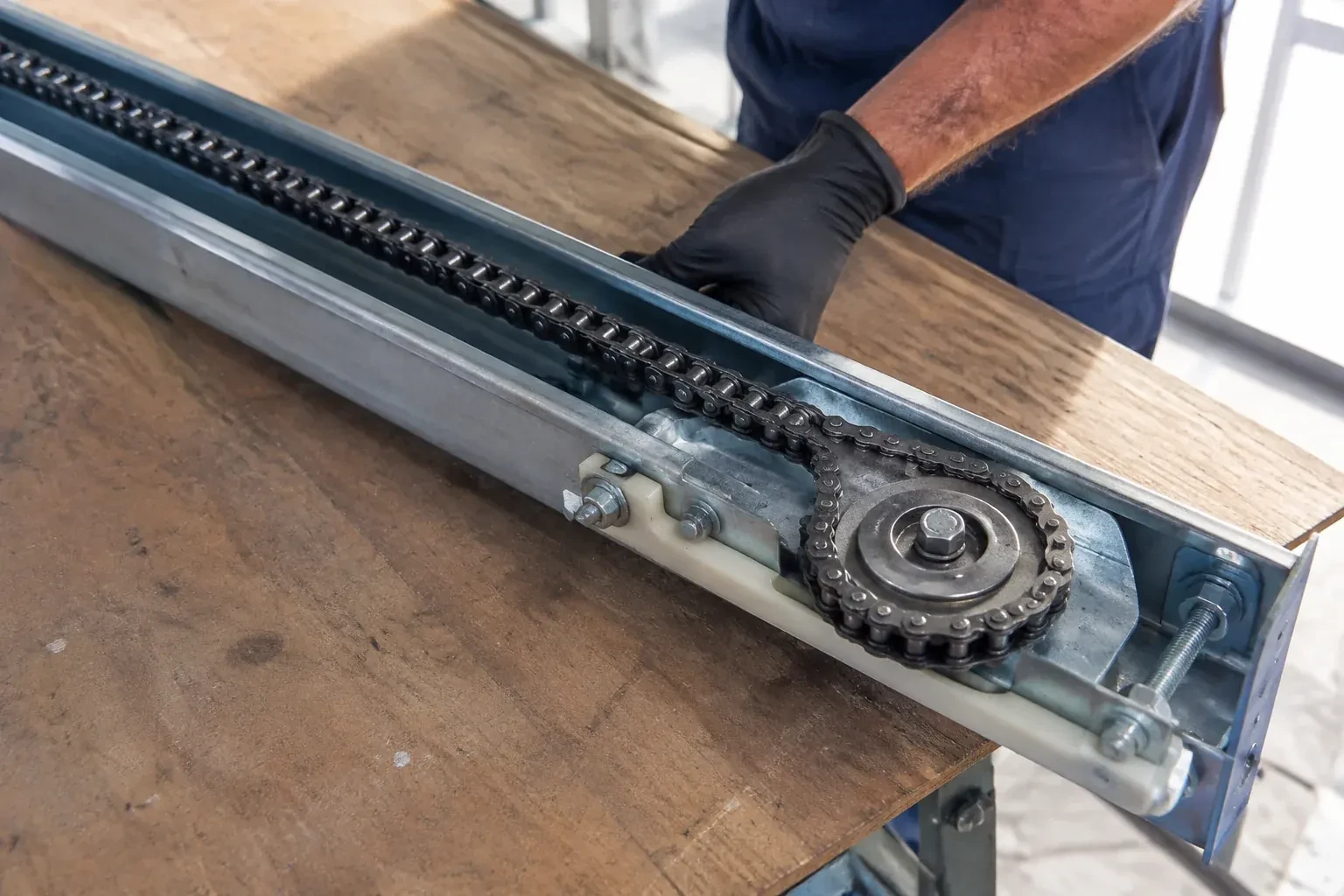 Book soonChain-Drive Opener RepairThe motor runs, you can hear it working, but the door never moves.
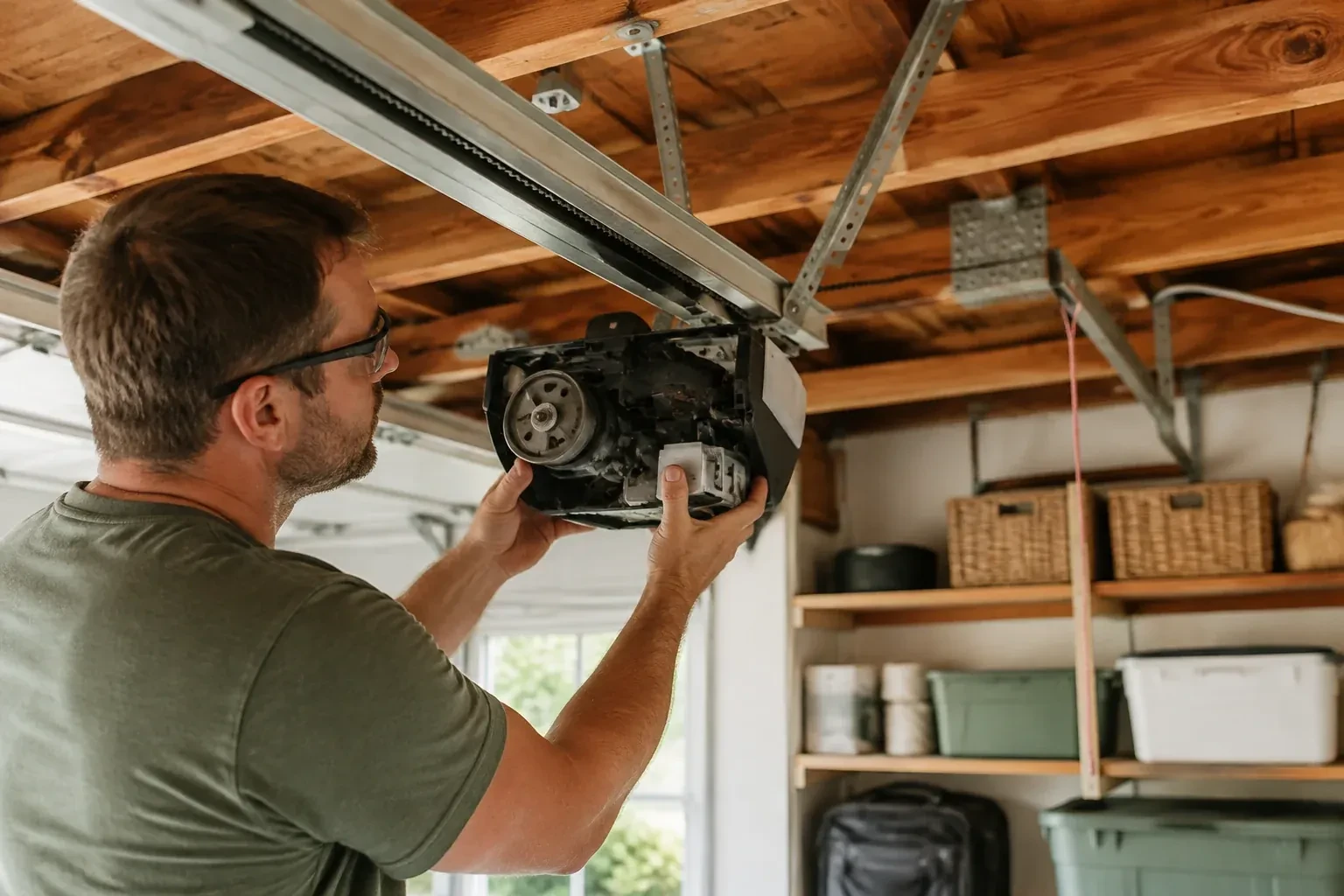 Book soonBelt-Drive Opener RepairSomeone tightened the belt last month to stop the sag.
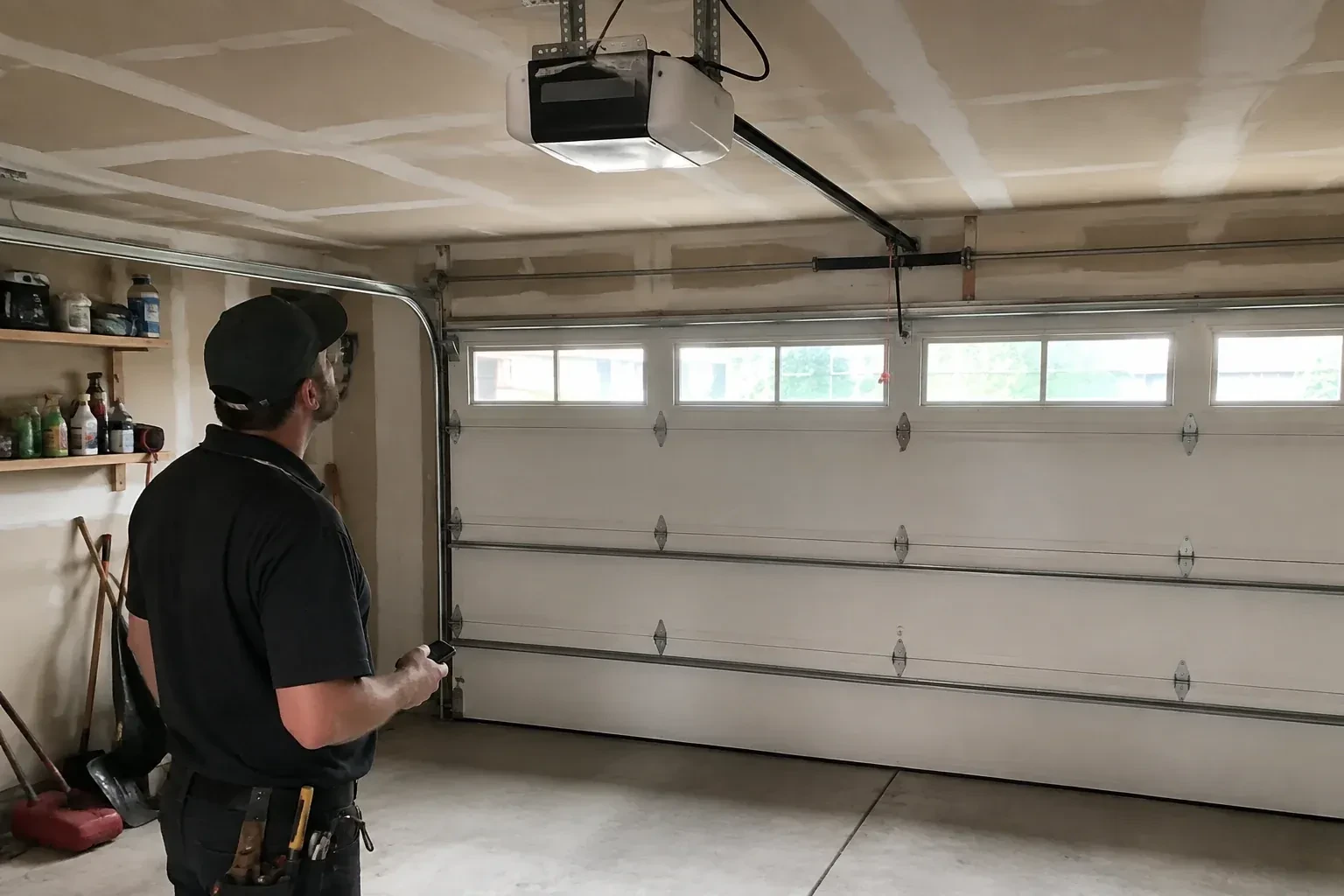 Plan aheadGarage Door Opener Replacement
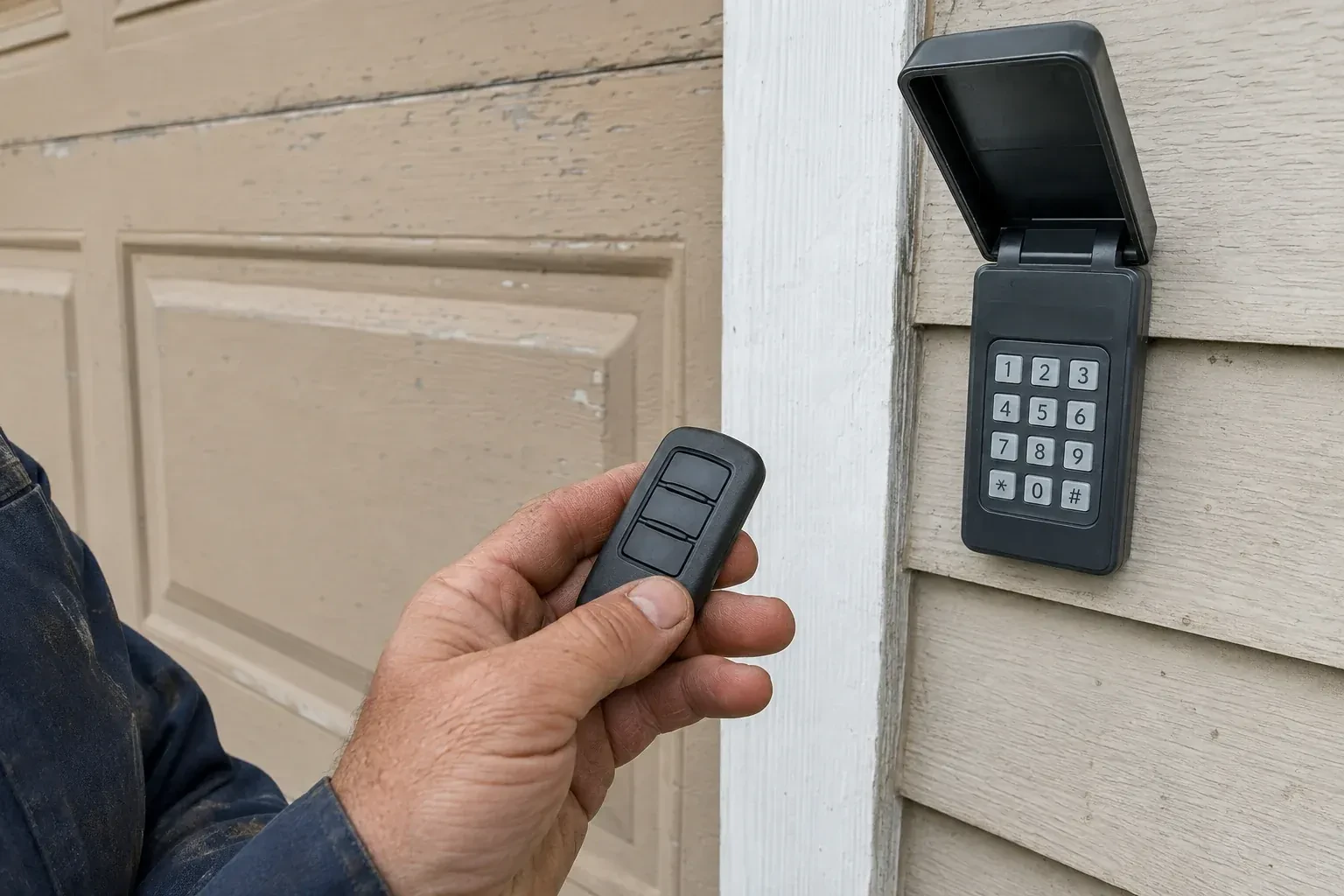 Plan aheadGarage Door Remote and Keypad Programming
Photo-Eye Sensor Alignment or Replacement near you
York, Ontario
Heritage Park information
- Town
- Heritage Park, York, Ontario
- In business
- 27 years
- Hours
- Open 24/7 · nights, weekends and holidays, same fees
- Phone
- (289) 907-1866
- Visits
- On-site assessment preferred. Request a visit or call.
What the census means at the door
38%
Homes of every age. About 38% of homes in King were built in 1980 or earlier, according to the 2021 Census.
Where homes of different ages sit together, the common thread is that every door eventually needs springs, rollers, seals and a balance check. What differs is the spring type and the size, so the technician measures and matches rather than fitting a standard part.
87%
Mostly houses. Single-detached houses make up about 87% of homes in King (2021 Census).
Where houses are detached, a side door into the garage and an interior door into the house are common, so the garage door is one of several ways in. Making sure it closes fully, locks properly and has its old remote codes cleared keeps the whole house secure.
Open 24/7
Request a visit
The door will only go down while a finger stays on the wall button; let go and it stops or reverses.
Call now · open 24/7(289) 907-1866- On-site assessment preferred
- Same fees day, night or weekend
- 27 years in business