Emergency Springs · Nobleton
Extension Spring Replacement in Nobleton
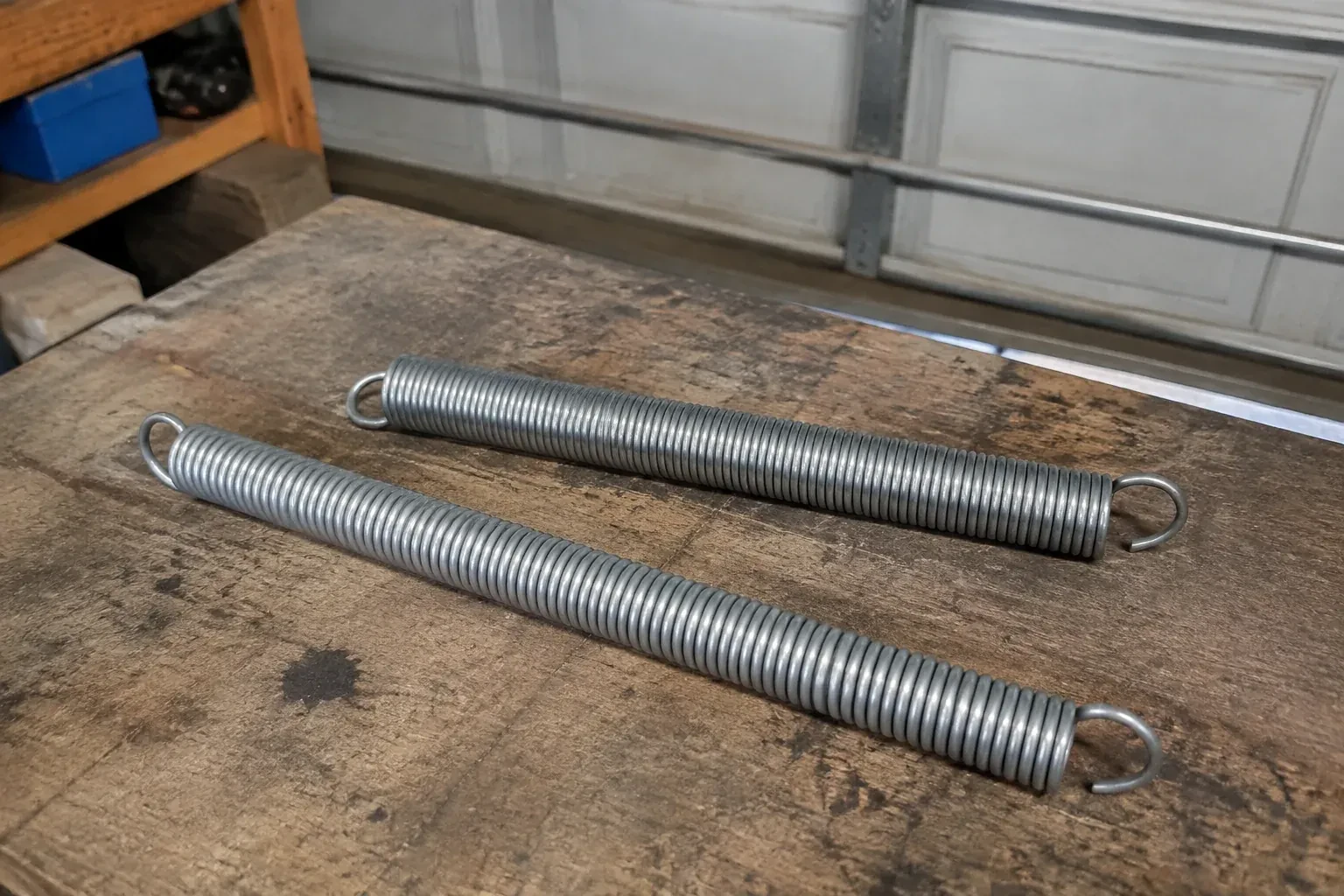
Open the door by hand and it drifts back down on its own, a little at first and then all at once. Nothing is broken that you can see, but the springs along the tracks look tired, rusty and slightly sagging.
Call now · open 24/7(289) 907-1866Right now
Before the door is looked at
Call (289) 907-1866, open 24/7.
When a spring breaks, the safe approach for the household is to leave the door where it is, keep people and vehicles clear, and avoid running the opener, which can damage the top section, the trolley or the gear drive.
Pull the manual release only when the door is fully closed unless a technician asks otherwise; a door disconnected while partly open can move on its own if the springs are out of balance.
Never drive a vehicle at a closed door to get out; the door collapses and the stored tension in the counterbalance is released. Use the release, the outside key release, or a technician.
In plain words
When one extension spring breaks, the other is replaced with it. The two springs were fitted together, have stretched the same number of times and have rusted in the same air, so the survivor is near the end of its life. More importantly, a door balances only when both sides pull equally; a new spring paired with a tired one lifts one corner ahead of the other and twists the door. Fitting a matched pair rated for the door's weight lets the technician set both sides to the same hook position and hand back a door that rises level and holds where it is left.
How the visit goesA bang like a dropped toolbox came from the garage last night. This morning one of the long springs beside the track hangs in two pieces, and the door will only rise a few inches before the opener gives up and stops.
Extension Spring Replacement · Nobleton
How the visit goes
- 1
Containment cables, present or missing
The question the industry's own inspection checklist asks of every extension-spring door is whether each spring has a cable running through its centre, anchored at both ends. The technician checks for it on both sides, then checks its condition: a cable that is frayed, kinked, anchored to a loose screw or simply tied off to the hanger is not doing its job. Doors installed decades ago often have none at all, and doors that had a spring changed by a previous owner sometimes have one side fitted and one forgotten. Fresh containment cables go on with the new springs, and their anchor points are set into solid framing so that a spring which breaks stays on its cable.
- 2
Taking the old springs down
With the door open and clamped, each old spring is nearly slack, and removal is straightforward. The technician unhooks the lift cable from its S-hook or clip at the front, which lets the spring's pulley end drop free, then lifts the rear loop off the hanger. The old containment cable is unclipped from its anchors and pulled out of the coil. On a door with a broken spring, the two halves are gathered and the containment cable, if there was one, is inspected for the marks of having done its job. Everything that comes down is laid out on the floor so the old spring can be measured against its replacement and you can see the wear.
- 3
A clear threshold and an honest opener
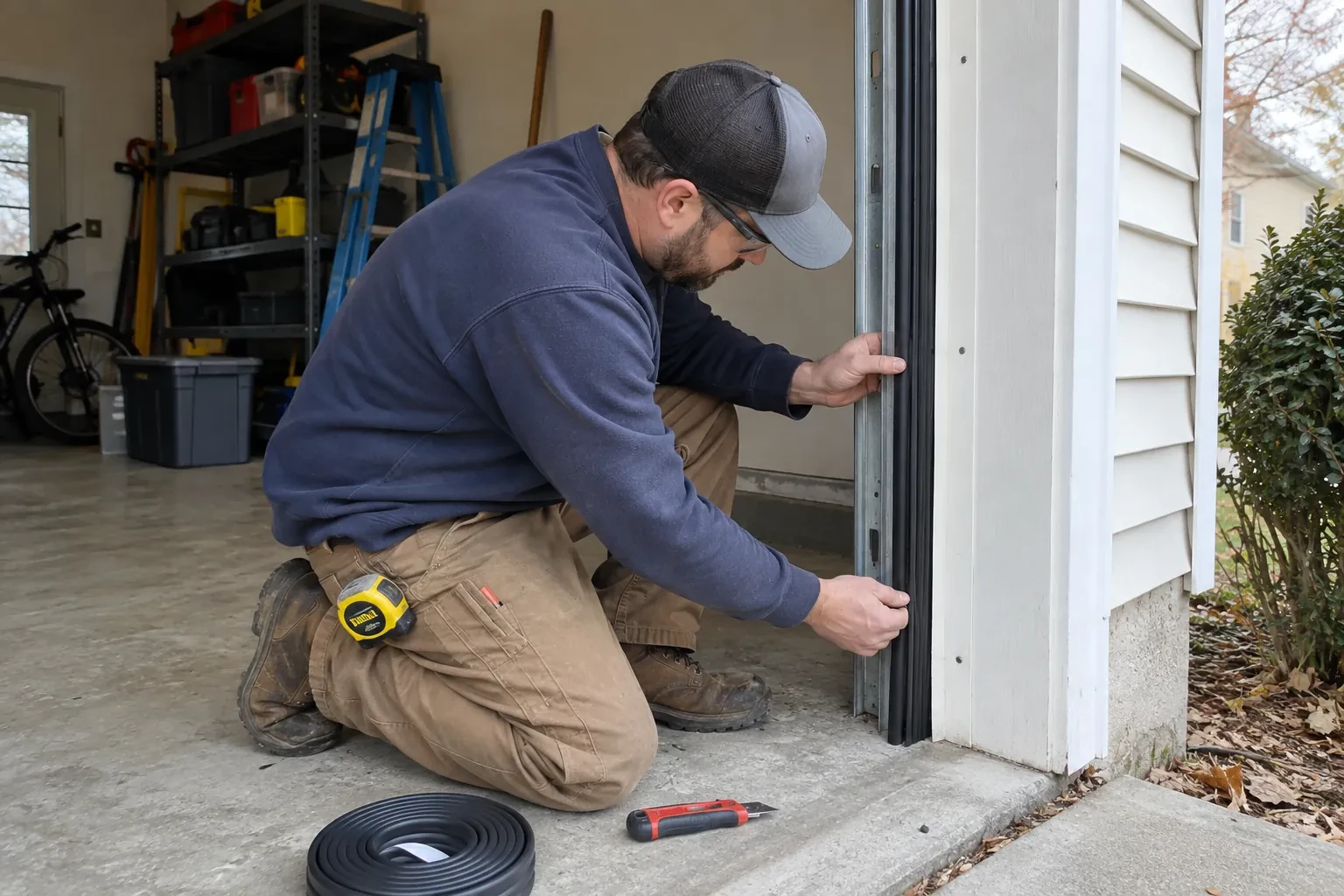
Two habits protect the new springs from the shocks that shorten a spring's life. The first is the floor: a door that comes down on a bin, a bike wheel or a ridge of packed snow stops short while the springs and cables are still pulling, and the jolt can throw a cable off its pulley. Keep the opening clear and scrape the ice ridge off the threshold before running the door in winter. The second is the opener's force setting. It was set for the newly balanced door; if the door ever seems to need more push, that is the springs asking for attention, not a reason to turn the force up.
In the van
- Pulleys (sheaves) and forks
- Containment (safety) cables
- Rear spring hangers and angle iron
- Bottom brackets and clevis pins
- Door-weighing scale
What affects the quote
- 1
Hangers and anchor points
A rear hanger that has loosened, a front bracket bent by a jumped cable, or framing that needs a new anchor point adds fasteners, angle iron and a little time.
- 2
Corroded fasteners
In an unheated garage the bolts through pulley forks and hanger brackets rust solid; freeing or cutting them and fitting new hardware takes time and shows in the parts list.
- 3
Working room around the springs
Shelving, a stored canoe or a car parked under the tracks slows the work along the horizontal run. Clearing the sides of the garage beforehand keeps the time on the quote short.
Same fees day, night or weekend.
Extension Spring Replacement: questions
What are the early signs that the springs are wearing out?
The door starts to feel heavier when lifted by hand and the opener sounds as though it is working harder. Released from the opener, the door sinks from halfway instead of holding. With the door open, gaps show between coils that used to sit tight together, or one spring hangs longer than the other. Rust bloom on the coils and a squeal from a pulley round out the list. Any of these is a good time to call.
Will the lift cables be changed as well?
They are inspected every time and changed when they show fraying, rust at the bottom loop, or a kink from having jumped a pulley. Cables and springs are generally the same age, and with the door already open and the springs off, fitting new cables adds little to the visit. Bright, tight strands with clean loops can stay and are simply re-routed over the pulleys and set to the new springs.
Why does the opener get adjusted after new springs?
Because the door is now much lighter for the opener to move. Over the years, as the old springs weakened, the opener's force setting may have been turned up to keep the door going, and its travel limits were set against a door that sat differently on the floor. Left alone, that extra force would push the newly balanced door too hard. Resetting force and travel, then repeating the reversal tests, matches the opener to the door it now has.
Springs & Hardware
Bigger photo, sooner job: Emergency Book soon Plan ahead
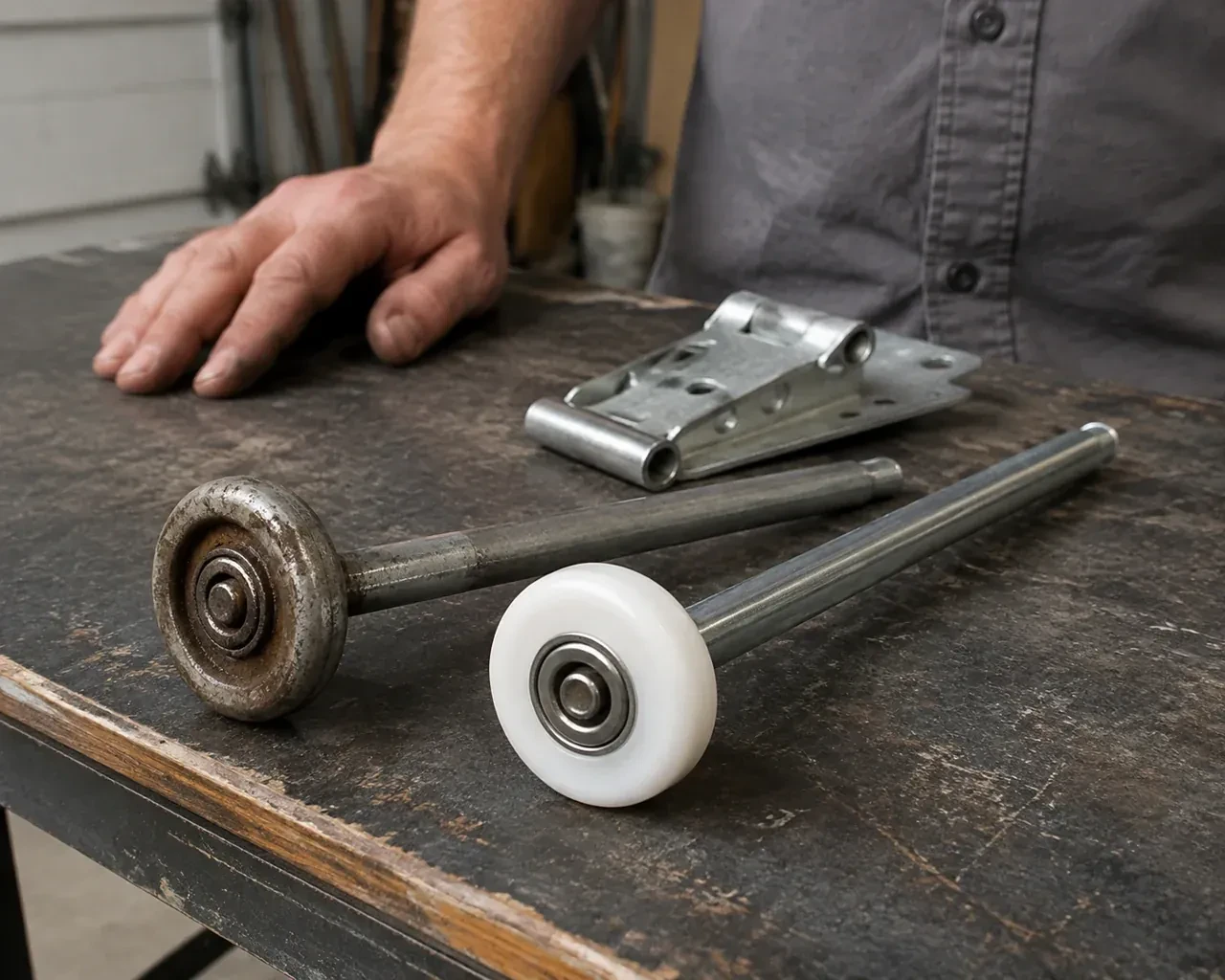 Book soonGarage Door Roller ReplacementThe door is the one the builder installed and has never had a part changed.
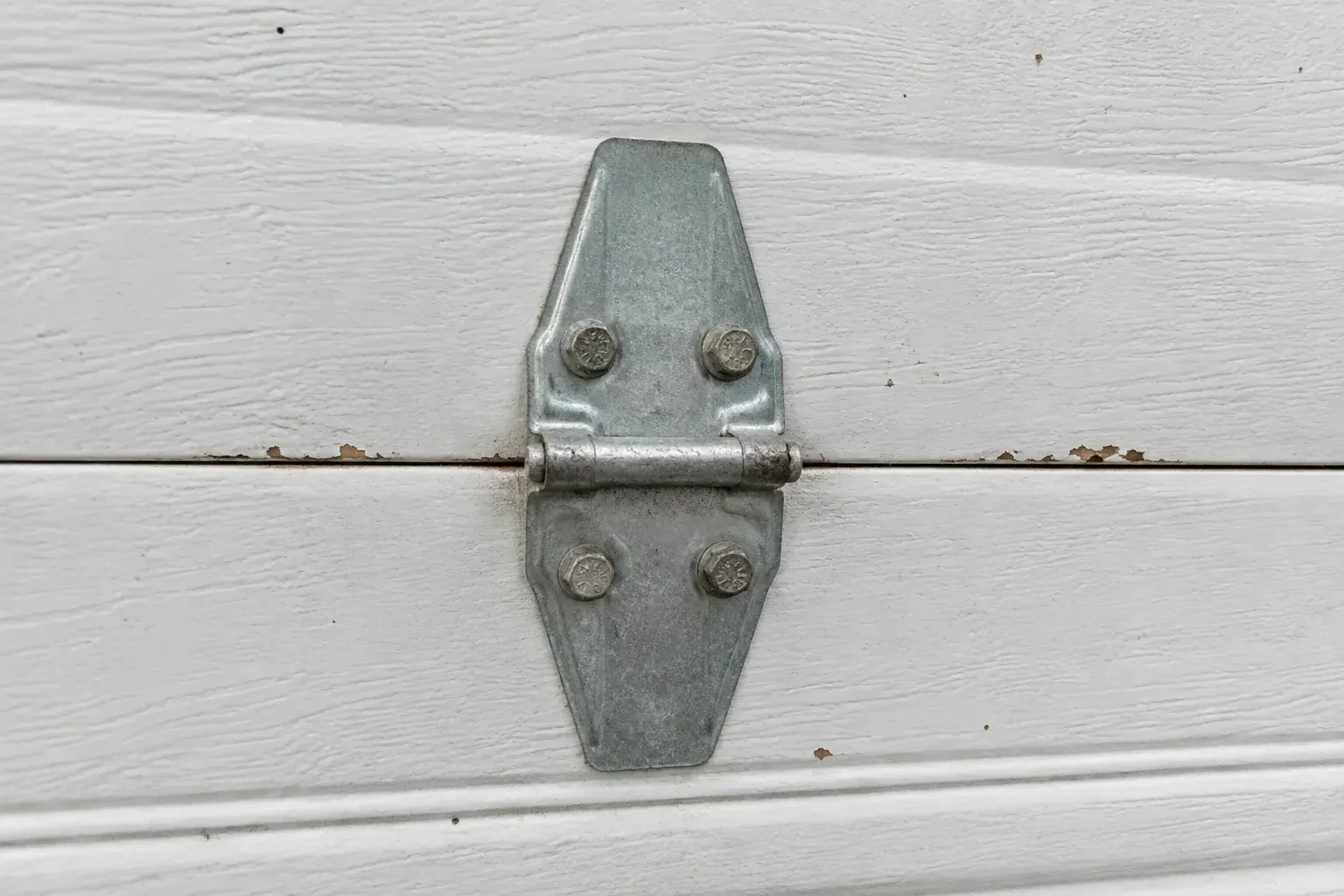 Book soonGarage Door Hinge ReplacementPressing a hand against one of the middle hinges makes it rock on the panel.
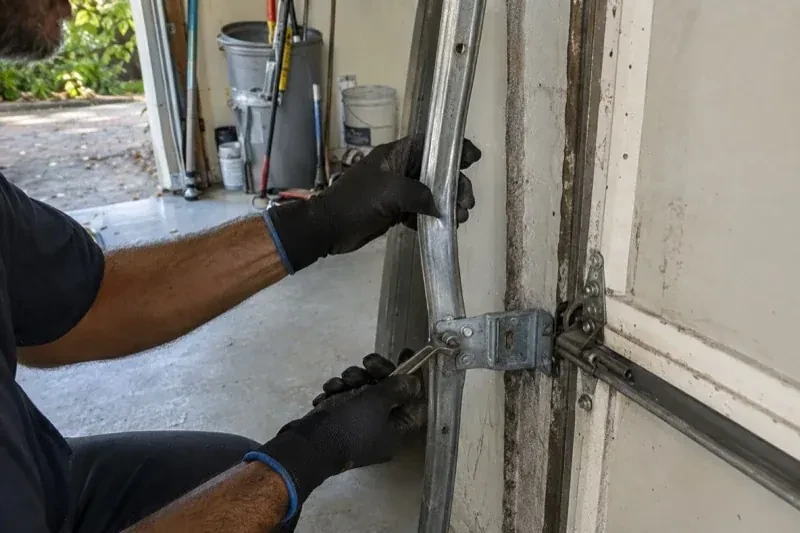 Book soonGarage Door Track Repair or ReplacementThe door climbs crooked, one side clearly ahead of the other.
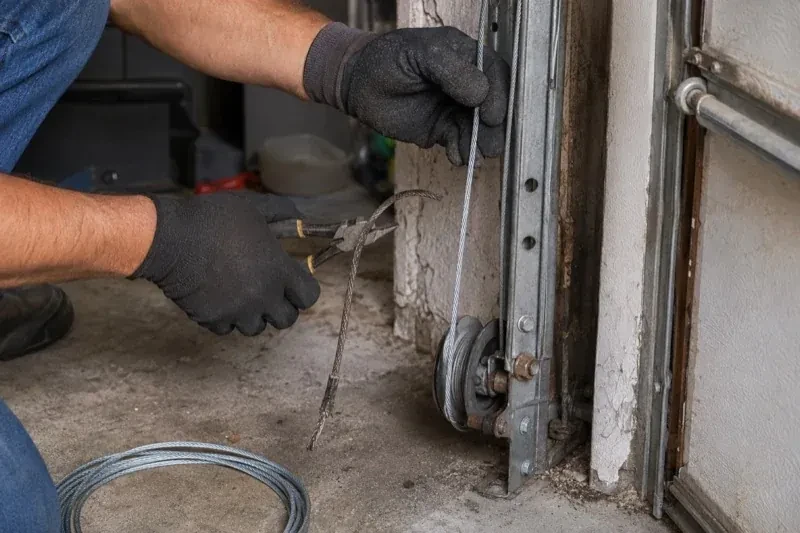 EmergencyGarage Door Cable ReplacementThe car bumper kissed the door on the way in.
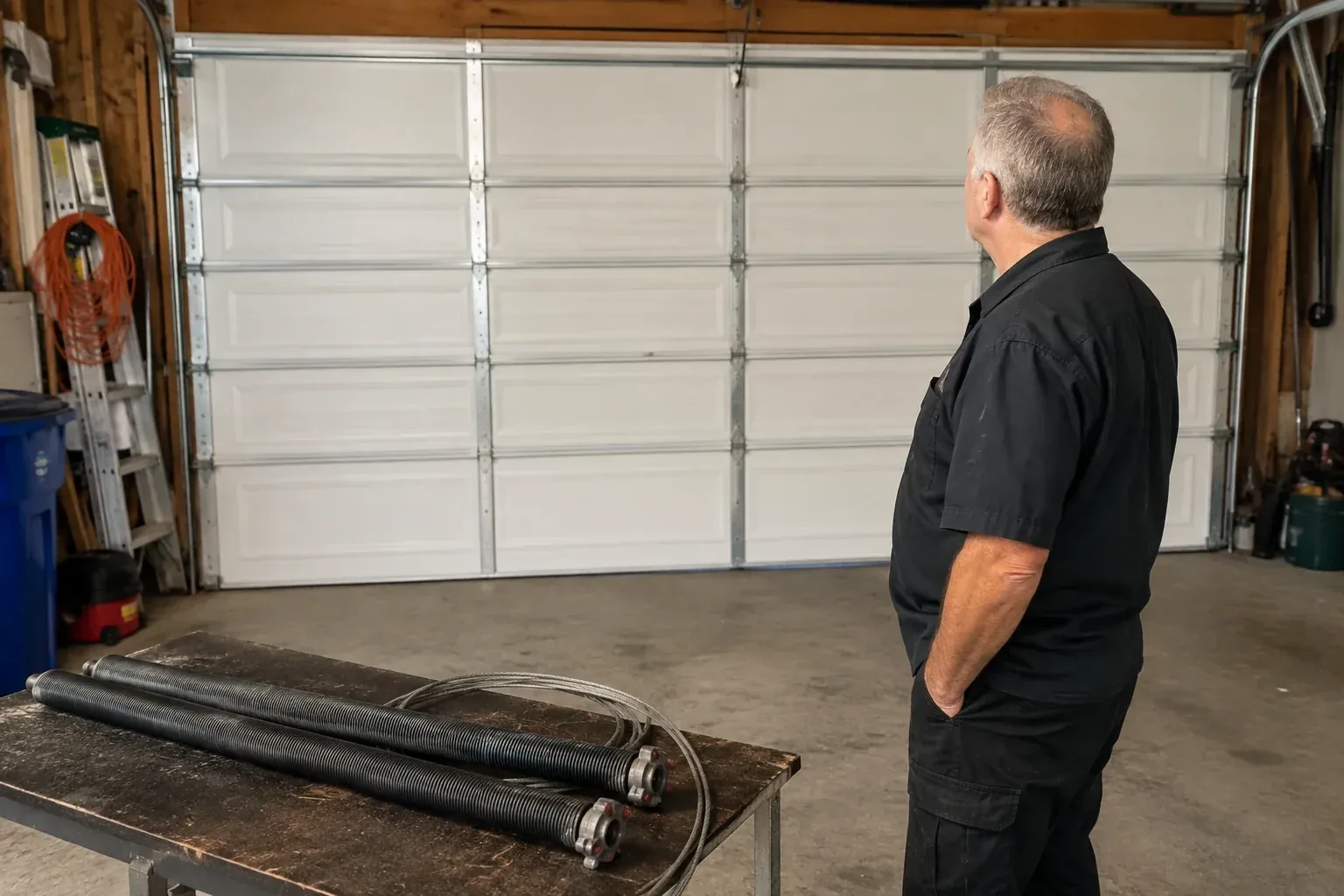 EmergencyTorsion Spring ReplacementLooking up at the coil above the door, you can see a clean split with a gap of several centimetres between the two halves.
Extension Spring Replacement near you
York, Ontario
Nobleton information
- Town
- Nobleton, York, Ontario
- In business
- 27 years
- Hours
- Open 24/7 · nights, weekends and holidays, same fees
- Phone
- (289) 907-1866
- Visits
- On-site assessment preferred. Request a visit or call.
What the census means at the door
38%
Homes of every age. About 38% of homes in King were built in 1980 or earlier, according to the 2021 Census.
A blend of older and newer homes usually means a blend of expectations too: keeping an original door running as long as sensible, or bringing a builder-grade door up to a quieter standard. Both are worthwhile, and the choice is explained at the door with the options side by side.
87%
Mostly houses. Single-detached houses make up about 87% of homes in King (2021 Census).
Detached houses commonly have attached two-car garages with a wide double door, which is a heavy door on a pair of torsion springs. Spring and cable work on these doors is done as a matched set so the door lifts level and the opener carries only its intended load.
Open 24/7
Request a visit
Open the door by hand and it drifts back down on its own, a little at first and then all at once.
Call now · open 24/7(289) 907-1866- On-site assessment preferred
- Same fees day, night or weekend
- 27 years in business